
Essential equipment and supplies for making bento lunches
This is a list of kitchen equipment that I find useful in prepping my bento lunches as fast and as efficiently as possible. This is not about bento accessories such as cute picks and sauce bottles, which are nice to have but not essential.
For information about how to select a bento box that's right for you, see Selecting the right bento lunch box.
Basic cooking equipment
- Two small non-stick frying pans
- One large (28cm diameter or about 11 inches) non-stick frying pan
- One or two small to mid-size saucepans
I use the small frying pans for quick frying, sautéing, and more. I use the large frying pan for boiling and steaming tasks as well as sautéing.
- An electric water kettle
How many minutes do you waste waiting for a pot of water to come to a boil? An electric water kettle does this essential task in the shortest time possible. One of the first things I do when making bento in the morning is to fill up my electric kettle and switch it on. If you are in the market for one, get the largest capacity model you can find.
- A cast iron grill pan
A grill pan is one of the best ways to quickly cook a piece of fish or meat, but it can be used for vegetables, tofu and more too. (I actually use a Le Creuset grill pan, which is enamel coated on the outside and uncoated on the inside.)
- Salad spinner
Use a salad spinner to wash all the leafy vegetables you get and try to get into the habit of washing them as soon as you get them home. If you can't manage that, at least try to wash them the night before you need them.
- Rice cooker with timer function
A rice cooker is the best tool for cooking white rice. The 'set-it-and-forget-it' convenience of a rice cooker with a timer function just can't be beat. Many modern rice cookers can handle brown rice as well as white rice, and can cook other kinds of whole grains as well. People even make soups and breads in a rice cooker! See Answering some rice cooker questions for more.
- Pressure cooker
If you are a vegan or vegetarian, or interested in introducing more whole grains and pulses (dried beans and legumes) to your diet, a pressure cooker is a must. A pressure cooker is great for brown rice, whole grains that need longer cooking (like barley), and dried beans. Dried beans are so much cheaper and better tasting than canned, and cook up in a short time in a pressure cooker. I often make a batch of beans, portion them and freeze them. See Pressure Cooker Love.
The rest of the items should be self-explanatory.
- Plastic zip bags
- Bowls and plates for laying out ingredients
- Sharp knives (a general purpose chopping knife and a small peeling knife)
- Microwave safe plastic wrap (saran wrap)
- Sealable, freezer safe glass or plastic containers for storing bits and pieces of food
Three tools that make cutting tasks easier
- Vegetable peeler
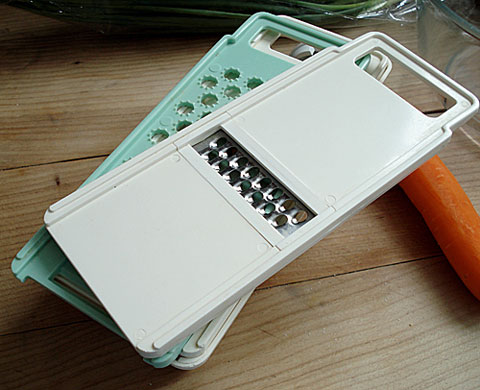
- Vegetable slicer or mandoline. I use a cheap "cassette" type from Japan, rather than my big, scary French mandoline, especially in the morning when I'm not too sharp but the mandoline blade is.
- A Microplane grater. I use this when I need to grate something because it's dead easy to clean up. It's the perfect tool for finely grating ginger, or zest, or something (not that I grate zest that much when I'm making bento.)
- Food processor - if you're in the market for a new one, try to get one that has a small 'baby food' bowl in addition to the regular big bowl. You'll use the small bowl a lot more for small chopping tasks.
For packing bento boxes:
- Long chopsticks (saibashi)
Saibashi are long, uncoated chopsticks (usually made of bamboo) meant for cooking. Often they are attached together with a string, which I just cut off. They are great for mixing things up, stir-frying, and so on, as well as for putting food in the bento box. 2 or 3 pairs (or 4 to 6 individual) saibashi held together act sort of like a whisk for rapidly stirring things, but are much easier to clean. Regular chopsticks will do fine too, though be careful not to use the lacquered kind in hot pans.
And finally, a couple of larger appliances that are nice to have:
- microwave oven
- toaster oven - A conventional oven takes far long to heat up, but a toaster oven is up in a jiffy.
Cute bento accessories are nice to have, but not essential
Essential bento making equipment to me is not about cute little egg formers or colorful plastic picks. It's about tools that make bento assembly fast and easy. Using egg formers and the like is optional, not mandatory. There are several reviews of bento boxes and accessories on this site however - see the equipment and supplies category, as well as the kyaraben category for decorative bento supplies and ideas.
If you enjoyed this article, please consider supporting this site by becoming my patron via Patreon.