japanese

Two kinds of chicken tsukune: Stewed dumplings and panfried mini-burgers

More chicken recipes! Tsukune is a term that means “kneaded and shaped into a round shape”. It usually means a dish made with finely ground and flavored chicken or fish. Chicken tsukune are very well suited to bentos, since they are soft and stay nice and moist. They are also gluten-free (no breadcrumbs!), if you take care to use a gluten-free cornstarch or potato starch and soy sauce.

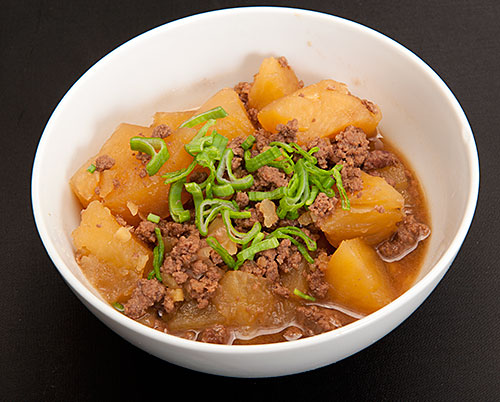
Today I’ll show you how to make two type of chicken tsukune from the same basic recipe. First, the very traditional stewed tsukune dumplings, cooked in a broth with carrots (tsukune-ni).

tsukune1.jpg

And here are some pan-fried tsukune, or tsukune baagaa (tsukune burgers) - actually mini-burgers to fit neatly into a bento box.

tsukuneburger2.jpg continue reading...

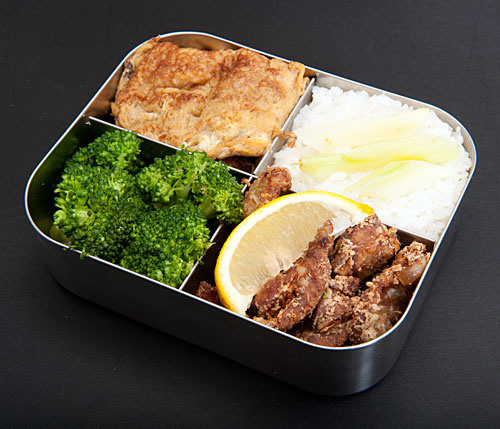
Bento no. 45: Chicken nuggets and peppers

bento_45_480.jpg

Bento contents:

Total calories (approx): 410 (how calories are calculated)

Time needed: 10-15 minutes in the morning

Type: Japanese, chicken! continue reading...

Bento no. 44: Pre-made inarizushi and bean sprout stir fry (vegan)

bento_44_480.jpg

Bento contents:

Total calories (approx): 360 (how calories are calculated)

Time needed: 5-10 minutes in the morning Type: Japanese, vegan continue reading...

Lower-calorie higher fibre inarizushi with hijiki

inarihijiki1.jpg

Inarizushi are excellent for bento, but they can be a bit high in calories since they are stuffed with sushi rice. The original version with a 100% rice filling has about 1/4 to 1/3 cup of rice per bag, which makes each inarizushi about 110 to 130 calories. On the other hand these inarizushi are about 80 to 100 calories per piece. The secret is in the filling. continue reading...

Bento no. 42: Easygoing shrimp bento

bento_42_480.jpg

Total calories (approx): 420 (how calories are calculated)

Time needed in the morning: 10-15 minutes

Type: Japanese continue reading...

Bento no. 41: Cold soba bento

bento_41_480.jpg

Bento contents:

Total calories (approx): 390 (how calories are calculated)

Type: Japanese, noodles continue reading...

Quick tip: Cubed bento rice

cuberice1.jpg

‘Cut’ your packed rice into cubes for function and looks! continue reading...

Bento no. 39: The basics of how to fill a classic bento box

bento_39a_480.jpg

Bento contents, 2-tier bento (580ml capacity):

  • 1 cup (1 cup=220ml) white rice, 240 cal
  • 1 small piece salted salmon, 50 cal
  • 1-egg tamagoyaki, 100 cal
  • Approx. 1/2 cup sweet pepper and onion confit, 40 calories
  • Blanched broccoli flowerets, 10 cal
  • Blanched snow peas (mangetout) 5 cal
  • Yukari (furikake made from umeboshi and red shiso leaves)

Total calories (approx): 445 (how calories are calculated)

bento_39b_480.jpg

Bento contents, 1-tier bento (670ml capacity):

  • 1 cup (1 cup=220ml) white rice, 240 cal
  • 2 small pieces salted salmon, 100 cal
  • 1-egg tamagoyaki, 100 cal
  • Approx. 3/4 cup sweet pepper and onion confit, 60 calories
  • Blanched broccoli flowerets, 10 cal
  • Blanched snow peas (mangetout) 5 cal
  • Yukari (furikake made from umeboshi and red shiso leaves)

Total calories (approx): 515 (how calories are calculated)

Time needed for both: 10-20 minutes in the morning (depending on your assembly speed and neatness factor)

Type: Japanese, omnivore (salmon, egg)

This is a fairly standard, classic Japanese style bento. I make this type of bento far more than any other. I’ve already given instructions on how to make the individual pieces, but I thought it might be useful to see step-by-step how to pack a bento box properly, with an eye to the following:

  • Presentation and attractiveness
  • Calorie content
  • Speed and ease

I’ve used two standard type bento boxes; a 2-tier model, and a 1-tier model with a divider. continue reading...

1 egg tamagoyaki (Japanese omelette)

1eggtamago-8.jpg

Tamagoyaki, the slightly sweet rolled Japanese omelette, is a standby protein item for bentos. It tastes great at room temperature, is fairly easy to make (once you’ve done it a few times), and is cheap too. Plus the cheery yellow color brightens up any bento box.

There is one drawback with tamagoyaki: unless you have a tiny tamagoyaki pan (which is a single-purpose piece of kitchen equipment, something I try to avoid stocking in my not-so-large kitchen), you need to make it with a least 2, preferably 3 or more, eggs, to produce the distinctive multilayers of egg. This is fine if you’re making bentos for two or more people, but when you’re making bento for one you may not necessarily want to eat 2 eggs at a time. And tamagoyaki held in the fridge for more than a day never tastes as nice.

This method of making a 1-egg tamagoyaki in a normal small frying pan was in a recent issue of Kyou no ryouri (Today’s Cooking), my favorite Japanese food magazine. I’ve tried it out a few times now, and I’m totally sold on it. It does make a slightly flatter tamagoyaki than a multi-egg one, but it still has those nice layers.

Here’s how to make it step by step. continue reading...

Making onigiri with a plastic bag

sam-onigiri.jpg

Reader Samantha sent in a great way to make onigiri that cleverly uses the corner of a plastic bag, to make these perfectly triangular or cone-shaped rice balls. continue reading...

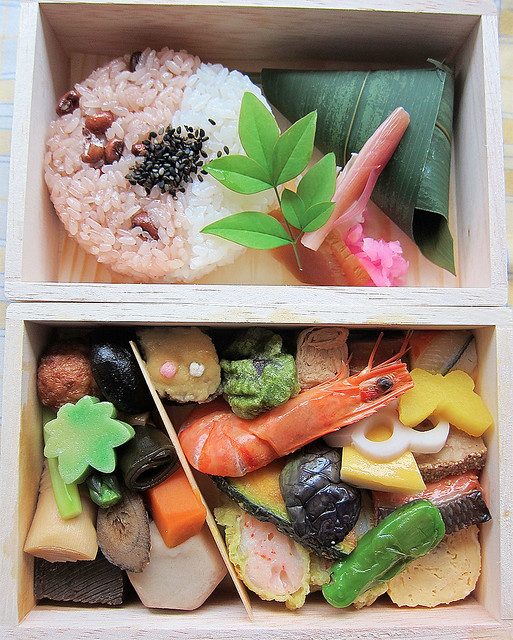
Bento no. 38: Onigiri bento box in action - Okowa sticky rice onigiri

bento38a_480.jpg

Bento contents:

Total calories (approx): 460 (how calories are calculated)

Time needed: 10-15 minutes in the morning

Type: Japanese, omnivore (chicken, egg) continue reading...

Bento no. 37: Onigiri bento box in action - salmon onigiri and vegetables

bento37a_480.jpg

Bento contents:

  • 2 onigiri with salted salmon filling, each onigiri with about 1/2 cup (1 cup = 220ml) white rice (300 cal)
  • 1/2 cup spicy miso marinated asparagus, 40 cal
  • 3/4 cup stir-fried red pepper, onion and zucchini with fried tofu (atsuage), 100 calories
  • A couple of slices of nori seaweed to wrap the onigiri
  • A couple of cherry tomatoes, mainly for color

Total calories (approx): 450 (how calories are calculated)

Time needed: 15-20 minutes in the morning

Type: Japanese, omnivore (salmon, miso, fried tofu) continue reading...

Bento filler: French green beans with carrot and ginger

ingenninnjinsu.jpg

Fresh green beans are available year round, but their real season in the northern hemisphere is the summer to early fall. I count crispy green beans among one of my favorite vegetables, so I enthusiastically eat as much as possible.

There are several kinds of green beans - large and fat, flat and broad, and so on. These are skinny little haricots verts or French beans. They can be rather expensive, so I like to cook them as minimally as possible. Here they are paired with julienned fresh ginger and carrot, stir fried then steam-cooked in a frying pan. The ginger adds some heat and the carrots add sweetness. They are cooked in less than 5 minutes, though allow some extra time to cut the ginger and carrot. You can use fatter green beans if you can’t get haricot verts - allow for a couple more minutes of cooking time.

This is great hot or cold, so it’s a very good bento vegetable dish. It will hold in the refrigerator for 2 to 3 days, so if you buy a big bag of green beans at the market it’s worthwhile to make a batch of this. continue reading...

Bento filler: Spicy miso marinated green asparagus

asparamiso_480.jpg

We’re nearing the end of the green asparagus season around here, so I’m trying to eat as much of it as possible. This miso marinated asparagus dish may look very spicy, but it’s only mildly so - it just looks rather hot because I used a red miso. The miso marinade does not overwhelm the asparagus flavor, but just enhances it. It is great in a bento since it’s salty, a little sweet and spicy all at once. continue reading...

Bento no. 36: Spring vegetable bento with jumping fish

bento36a_450.jpg

Bento contents:

  • 1 cup (1 cup = 220ml) bamboo shoot rice made with sprouted brown rice, 200 cal
  • 1 1/2 cups asparagus, bamboo shoot and snow pea stir-fry, 70 cal
  • 1 wiener cut into fish, 150 cal

Total calories (approx): 420 (how calories are calculated)

Time needed: 10 minutes in the morning

Type: Japanese, omnivore (wieners!) continue reading...

All natural vegetable based green, pink and orange rice

coloredriceanimals1_480.jpg

Previously, I showed you how to make orange colored carrot rice. The make-in-a-few minutes microwave method was especially popular. So, here’s how to make pink (or purple) and green colored rice just as easily. The best thing about them is that they are colored just with vegetables - no hard to pronounce ingredients in sight.

I’ve used white rice for color clarity, but you could use regular or sprouted brown rice instead. I used leftover rice from the night before; you could also use defrosted frozen rice. continue reading...

Noriben, a true Japanese classic

noriben_480.jpg

There are some dishes that are so basic to make that they barely ever get mentioned in cookbooks. Noriben (the word comes from nori and bento mashed together) is one of them. It’s a really basic bento, consisting of just 3 or 4 ingredients: rice, nori seaweed, soy sauce, and often dried bonito flakes. It’s tasty and inexpensive. It was standby for my mother when there was nothing else in the house except for a few pantry staples, and she had to make bento for two of the kids plus my father.

Whether or not you’d like noriben or not depends on whether you like the sea-taste of nori and soy sauce. It’s one of those things that Japanese people tend to think that only a Japanese person could really love. It makes most Japanese people feel very nostalgic.

For the sake of nutritional balance you might want to have other, not too salty things in your bento box with noriben, such as steamed vegetables, chicken, fried tofu, or a piece of grilled fish. continue reading...

Bento no. 35: Special occasion- Spring sushi picnic bento

bento_35_480.jpg

Bento contents: continue reading...

  • Bite size shrimp and caper sushi, about 40 cal per piece
  • Tamagoyaki (Japanese omelette), 3 eggs worth, cut into 12 pieces - about 30 cal per piece
  • Cherry tomatoes
  • Blanched snow peas or mangetout
  • Carrot flowers
  • Cherries (not shown)

Okowa: Sticky rice with all kinds of good things

okowa1.jpg

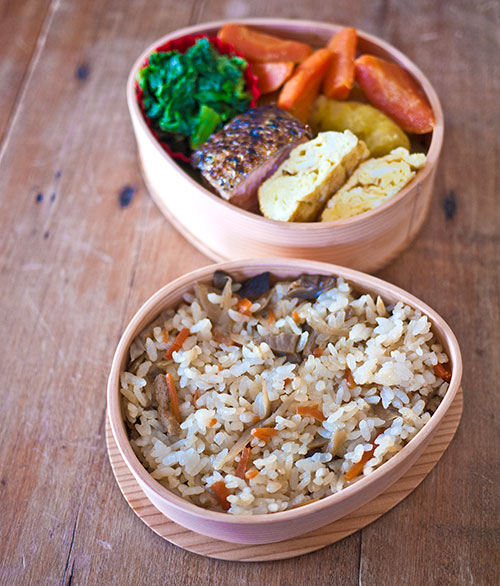
Okowa (おこわ)is the name given to a type of rice dish in which sticky glutinous rice is mixed with all kinds of vegetables or meat and steamed. It’s related to Chinese sticky rice, which you might have had as part of a dim sum meal. If the rice mix is steamed in small packets, wrapped in a bamboo leaf, it’s called chimaki. You can mix any number of things in with the rice to make it a complete meal in itself. continue reading...

Japanese dry curry with soybeans or tempeh

soybeandrycurry.jpg

Dry curry is a uniquely Japanese dish, much like the stew-type of Japanese curry. Dry curry is really well suited to bentos. The spicy curry aroma is appetising yet not overwhelming, and the combination of salty, spicy and sweet flavors really gets me going.

The recipe for a more traditional ground meat based dry curry has already been posted on Just Hungry. This is a vegan version that uses cooked soybeans or crumbled tempeh. It’s so rich in flavor that even non-vegetarians won’t miss the meat. It’s also very easy to make, though a food processor helps for chopping up all the vegetables.

Both the meat based and this soybean based dry curry mixes freeze very well, making them perfect freezer staples. continue reading...

Bento no. 32: Fiber-rich vegan leftovers bento

bento_32a_480.jpg

Bento contents:

Total calories (approx): 485 (how calories are calculated)

Time needed: 10 minutes in the morning

Type: Japanese, vegan (tofu) continue reading...

Bento no. 31: Quick-assembly bento with nothing made ahead

bento_31a_480.jpg

Bento contents:

Total calories (approx): 480 (how calories are calculated)

Time needed: 10-15 minutes

Type: Japanese, meatless (tuna) continue reading...

Bento no. 29: Featuring eggs in treasure bags

bento_29a_480.jpg

Bento contents:

Total calories (approx): 525 (how calories are calculated)

Time needed: 5 minutes in the morning for assembly

Type: Japanese, meat-free, gluten-free (see notes continue reading...

Eggs in treasure bags (Tamago no takarabukuro)

tamago_takarabukuro1.jpg

Takarabukuro (宝袋) is a treasure bag. In food terms, it’s a small parcel that is cooked in a fried tofu skin (aburaage 油揚げ)bag - the one that’s used for inarizushi. Here an egg is dropped gently into the bag, and then poached - so, an egg in a treasure bag! It is delicious hot or cold, and is very nice in a bento box as a main or secondary protein. continue reading...

Bento no. 25: A shoujin ryouri type vegan bento

bento_25a_450.jpg

Bento contents:

  • 1 1/4 cups zakkukumai (mixed-grain rice, see this article), 200 cal
  • ‘Vegan scallops’ made with komachibu and shiitake mushrooms (recipe), using 10 g of komachibu, 50 cal
  • Carrot kinpira (recipe), about 1/3 cup, 50 cal
  • Blanched spinach with soy sauce (recipe), 10 cal

Total calories (approx): 310 (how calories are calculated)

Time needed: 20 minutes in the morning if you make everything in the morning

Type: Japanese, vegan (shoujin ryouri style) continue reading...

Panfried Komachibu - Vegan 'Scallops'

panfriedfu.jpg

Komachibu is a small round form of yakifu, grilled and dried fu. Fu is a traditional Japanese form of wheat gluten, that is a good vegan protein source. (Read more about fu.) If you like to use seitan, you’ll probably like fu as well. Komachibu is available at any reasonably stocked Japanese grocery store (in the dried food section).

Komachibu are about the size of a large coin. When they are reconstituted in water, they swell up to about the size of a small scallop (they do shrink back down a bit when cooked with this method). The texture is very soft, like very very tender scallops. I don’t pretend that they are as good as real, fresh scallops of course, but if you’ve given up shellfish for dietary reasons, these are not bad at all. And, they are terrific in a bento box, vegan or not. continue reading...

Bento filler: Easy sugarfree carrot kinpira

kinpiraninjin.jpg

This is probably my favorite way to eat carrots - cut into matchstick size, stir fried in sesame oil until crisp-tender with some red pepper flakes, and finished with a scatter of sesame seeds. It’s crunchy, salty and spicy. It’s really tasty at room temperature, which makes it a great bento filler. continue reading...

Bento filler: Blanched spinach with soy sauce or sesame sauce

spinach2.jpg

You may be used to eating spinach leaves in salads, or sautéed. In Japan spinach is rarely eaten raw. The most common way to eat spinach is to blanch it briefly. You may lose some nutrients when you do this, but it’s more than made up for I think by the fact that you can eat a whole lot more spinach than in a salad or so.

In the U.S. and Europe, it’s probably easier these days to buy ready-washed bags of the leaves only. This is a bit of a shame really, because spinach stalks and roots have a different texture which adds interest. In any case, the instructions here assume that you are dealing with the leaves only. continue reading...

Bento no. 23: Parsley lemon sushi with salmon

bento_22a_450.jpg

Bento contents:

  • Parsley and shiso leaves in lemon-flavored sushi with 1 cup white rice cooked with white zakkoku mix (approx: 200cal)
  • Lotus root slices (approx. 20 cal)
  • Salted salmon, about 50 g / 1 3/4 oz (approx. 80 cal)
  • Usuyaki tamago (thin egg omelette) (approx. 80 cal)

Total calories (approx): 380 (how calories are calculated)

Time needed: 20 minutes in the morning, 10-15 the night before

continue reading...

Related sites

    » follow me on Twitter

    Just Bento is a site dedicated to healthy bento box meals.

    Causes we support

    wfp banner img
    freerice234_60_Banner2.jpg

    Subscribe

    Subscribe in a reader


    Subscribe by email:


    Or use your favorite web tool:
    Add to Google Reader or Homepage

    Add to netvibes
    Subscribe in Bloglines

    Share this site

    Add to Technorati Favorites

    stumbleupon