eggs

Bento no. 40: Pasta Salad Niçoise with a twist

bento_40a_480.jpg

Bento contents:

  • 1 U.S. cup or 5oz / 140g spelt pasta, 170 cal
  • A few pieces of white flour pasta, 40 cal
  • 1/4 cup or 1.75 oz / 50g frozen tuna salad with mayonnaise, 120 cal
  • About 3/4 cup sweet pepper and onion confit with zucchini, 90 cal
  • 1/2 Tbs. olive oil, 55 cal
  • 3-4 black olives, 30 cal
  • 1 boiled egg, 80 cal
  • Lemon juice, cherry tomatoes, celery, parsley, 10 cal

Total calories (approx): 645 (how calories are calculated)

Type: Pasta salad! continue reading...

Bento no. 39: The basics of how to fill a classic bento box

bento_39a_480.jpg

Bento contents, 2-tier bento (580ml capacity):

  • 1 cup (1 cup=220ml) white rice, 240 cal
  • 1 small piece salted salmon, 50 cal
  • 1-egg tamagoyaki, 100 cal
  • Approx. 1/2 cup sweet pepper and onion confit, 40 calories
  • Blanched broccoli flowerets, 10 cal
  • Blanched snow peas (mangetout) 5 cal
  • Yukari (furikake made from umeboshi and red shiso leaves)

Total calories (approx): 445 (how calories are calculated)

bento_39b_480.jpg

Bento contents, 1-tier bento (670ml capacity):

  • 1 cup (1 cup=220ml) white rice, 240 cal
  • 2 small pieces salted salmon, 100 cal
  • 1-egg tamagoyaki, 100 cal
  • Approx. 3/4 cup sweet pepper and onion confit, 60 calories
  • Blanched broccoli flowerets, 10 cal
  • Blanched snow peas (mangetout) 5 cal
  • Yukari (furikake made from umeboshi and red shiso leaves)

Total calories (approx): 515 (how calories are calculated)

Time needed for both: 10-20 minutes in the morning (depending on your assembly speed and neatness factor)

Type: Japanese, omnivore (salmon, egg)

This is a fairly standard, classic Japanese style bento. I make this type of bento far more than any other. I’ve already given instructions on how to make the individual pieces, but I thought it might be useful to see step-by-step how to pack a bento box properly, with an eye to the following:

  • Presentation and attractiveness
  • Calorie content
  • Speed and ease

I’ve used two standard type bento boxes; a 2-tier model, and a 1-tier model with a divider. continue reading...

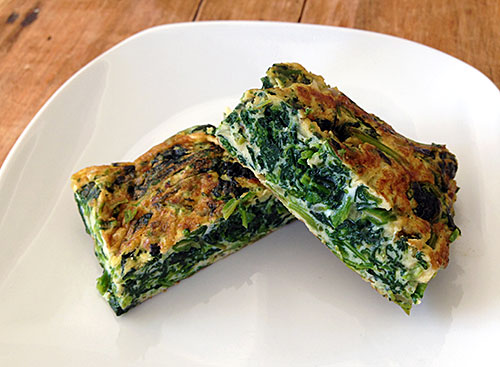
Cheese and parsley microwave omelette

cheeseomelette-8.jpg

Here’s another easy egg recipe made with 1 or 2 eggs. It’s made in the microwave, and the method can be used for an ‘omelette’ with all kinds of additives. Here I have used a little bit of leftover cheese and some parsley. It goes well in a rice based or bread based bento. Cooking egg in the microwave is mentioned in several Japanese bento books and magazine articles, from which I’ve adapted the following method. continue reading...

1 egg tamagoyaki (Japanese omelette)

1eggtamago-8.jpg

Tamagoyaki, the slightly sweet rolled Japanese omelette, is a standby protein item for bentos. It tastes great at room temperature, is fairly easy to make (once you’ve done it a few times), and is cheap too. Plus the cheery yellow color brightens up any bento box.

There is one drawback with tamagoyaki: unless you have a tiny tamagoyaki pan (which is a single-purpose piece of kitchen equipment, something I try to avoid stocking in my not-so-large kitchen), you need to make it with a least 2, preferably 3 or more, eggs, to produce the distinctive multilayers of egg. This is fine if you’re making bentos for two or more people, but when you’re making bento for one you may not necessarily want to eat 2 eggs at a time. And tamagoyaki held in the fridge for more than a day never tastes as nice.

This method of making a 1-egg tamagoyaki in a normal small frying pan was in a recent issue of Kyou no ryouri (Today’s Cooking), my favorite Japanese food magazine. I’ve tried it out a few times now, and I’m totally sold on it. It does make a slightly flatter tamagoyaki than a multi-egg one, but it still has those nice layers.

Here’s how to make it step by step. continue reading...

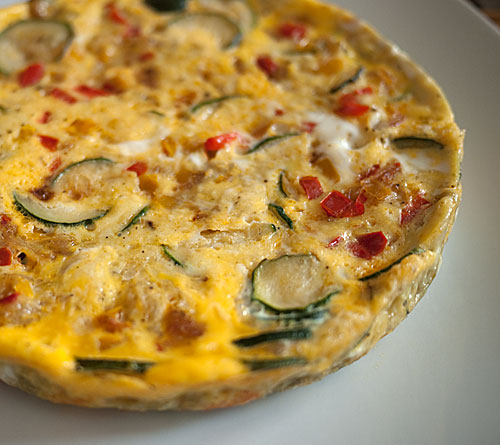
Stovetop leftover vegetable frittata

veg_frittata.jpg

Frittata, a thick Italian omelette, is an egg dish that’s great hot or cold. It’s perfect picnic fare, which means it’s also great for bento. The usual frittata recipe calls for baking it in the oven, but it’s hard to find the time to heat up the oven and then bake something on a weekday morning. This method of cooking it on the stovetop appeared in the April issue of kyou no ryouri (Today’s Cooking) magazine. The total cooking time is only about 10-15 minutes.

The original recipe just used broccoli, but I used a mix of steamed broccoli and the ever-useful red pepper and onion confit . You could make it with any cooked vegetable mix, so it’s a great way of using up leftovers. You could add chopped up leftover meat to this too if you like. Cheap, frugal and tasty! continue reading...

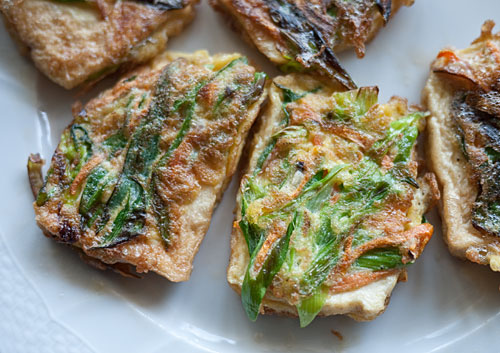
Eggs in treasure bags (Tamago no takarabukuro)

tamago_takarabukuro1.jpg

Takarabukuro (宝袋) is a treasure bag. In food terms, it’s a small parcel that is cooked in a fried tofu skin (aburaage 油揚げ)bag - the one that’s used for inarizushi. Here an egg is dropped gently into the bag, and then poached - so, an egg in a treasure bag! It is delicious hot or cold, and is very nice in a bento box as a main or secondary protein. continue reading...

Fun with Japanese egg molds

eggmold-goodex.jpg

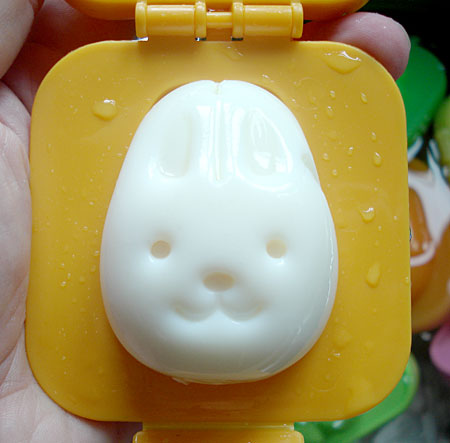
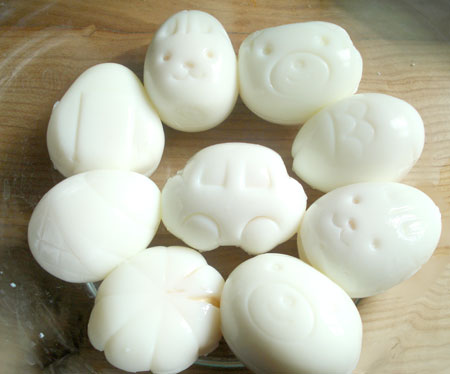
Egg molds are a fairly easy way to add some cuteness to a bento box. They are meant for kids’ bentos, but there’s nothing to stop you from using them for yourself of course. I usually can’t be bothered to make molded eggs for everyday bentos, but for picnics and parties they are quite a lot of fun.

eggmold-white-finish.jpg

Egg molds are offered by various online sources such as J-List and eBay merchants (see the left sidebar for some listings), as well as at 100 yen stores. There are two types of egg molds: one has a simple clamshell shape with a fastener, and the other has a inner half-shell. You can use the latter kind without the inner half-shell too. Either way, be sure you get one that has the clamshell shape and the closing fastener - these features are what make an egg mold work properly. continue reading...

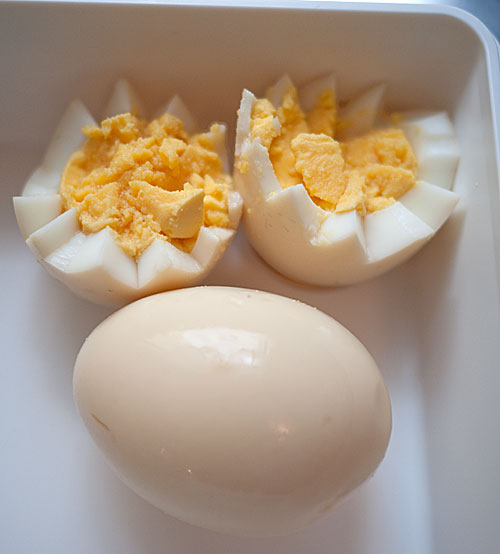
Lazy easy tea eggs

easyteaeggs.jpg

This is a sort of short-term storage staple. It only keeps in the refrigerator for about 3 or 4 days, but you can make them at any time and they are handy for filling a corner of a bento box.

There are many more complicated recipes for tea eggs, a traditional Chinese recipe. The boiled eggs are usually meant to be kept in the tea-based marinade with their shells on, carefully cracked all around so that a lovely marble pattern is revealed when the eggs are peeled.

My method is way simpler, and is motivated by the fact that I don’t really want to be fiddling around with peeling eggs in the morning. Since the eggs are totally peeled, the marinade will penetrate it faster and deeper, so you can start using them just an hour after you’ve put them in the liquid if you like. continue reading...

Related sites

    » follow me on Twitter

    Just Bento is a site dedicated to healthy bento box meals.

    Causes we support

    wfp banner img
    freerice234_60_Banner2.jpg

    Subscribe

    Subscribe in a reader


    Subscribe by email:


    Or use your favorite web tool:
    Add to Google Reader or Homepage

    Add to netvibes
    Subscribe in Bloglines

    Share this site

    Add to Technorati Favorites

    stumbleupon