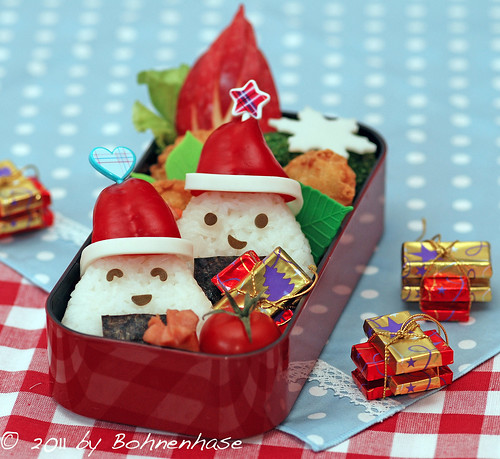
Bento contents:
Total calories (approx): 510 (how calories are calculated)
Time needed: 25-30 minutes to decorate the muffins (muffins are pre-made and frozen)
Type: Not Japanese, theme bento, vegetarian continue reading...

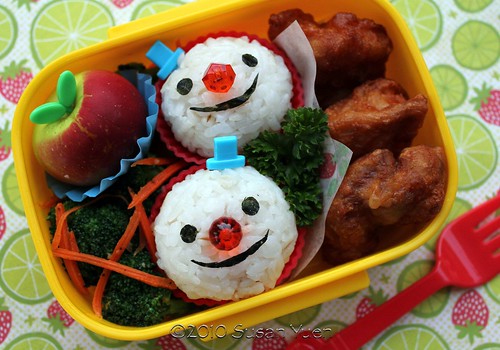
Bento contents:
Total calories (approx): 410 (how calories are calculated)
Time needed: 15 minutes the night before; 20 minutes in the morning
Type: Quick, not-rice-based charaben continue reading...
The Manga Cookbook has been out for a while, but I have a copy to give away courtesy of the publisher, so here’s a short review. While this is not a bento cookbook, it has a few bento-friendly recipes in it. Besides, the cute manga format will probably appeal to many Just Bento readers (which is why this review is here on Just Bento rather than on Just Hungry). (Note: The giveaway is now closed. Thank you to everyone for entering!) continue reading...
To start off the weekend, here is a fun guest post from Jen of Tiny Urban Kitchen, about making sushi that is not exactly what it seems to be!

This is not what you might think it is. Yes, it looks like sushi - almost too similar. But guess what? It’s mochi! It’s mochi with various fruit pieces posing as fish.
Mochi is surprisingly easy to make. You can actually make this dessert with kids, it’s so easy and fun. The nigiri are especially easy - just cut up various fruits into squares to put on top. Rolls are a bit trickier, but not impossible. continue reading...

A regular family outing bento (photo by Michiko Ebina)
(Note: This is in part a belated response to the New York Times blog post about bento boxes that appeared in September. I had started it some weeks ago but didn’t have the time to finish, until now. Please also read the very thoughtful forum discussion about the post.)
The New York Times blog post about Beauty and the Bento Box was, after the recent balanced article about bento boxes that appeared in the same publication, was rather disappointing. To see yet another piece in the mainstream media focusing just on the aesthetics of bentos, and specifically on charaben, gives me a “What, again?” sort of resigned feeling. The question that they posed to a group of experts (only one of whom is Japanese…I wonder how many have even had a homemade bento for lunch?) was a leading question if there ever was one: “What does the care devoted to the visual details in a packed lunch suggest about the culture? Why is such value placed on aesthetics in everyday life in Japan?”.
I’ve repeated this many times on this site already, but the basic definition of a bento box is “a meal in a box”, as the subtitle of this site says. Bentos can be for any meal. They can be made by and for anyone. They are often portable, but not always (as for bento box lunches served at sit-down restaurants). In short, bentos are just part of everyday life for most Japanese people. Charaben are just one category of bentos. continue reading...
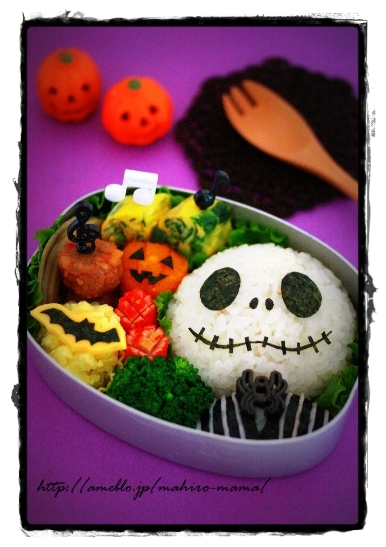
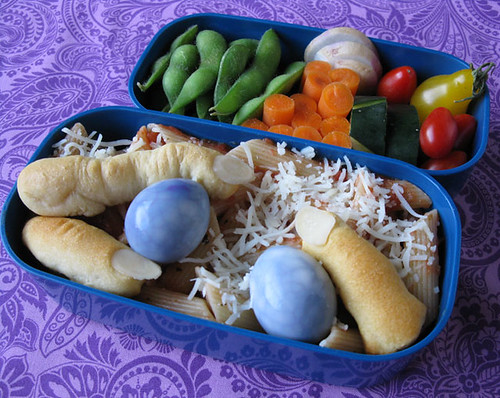
I haven’t had any time to make a Halloween themed bento this year, since I’m still working on the recipes for my book. But many talented bentoists in the Just Bento flickr pool have been busy making some really scary-cute bentos! It just goes to show that, contrary to some misplaced assumptions, it’s not just Japanese moms that can get very creative with bentos. Here are a few that caught my eye. continue reading...

One sign that bentos are becoming trendy, if they aren’t already, may be that they are being made into iPhone apps. There is of course the database app from FileMaker, Bento (which messes up searches for bento recipes!), which uses the divided bento box as a metaphor for organizing data. But there are a few apps that actually use the edible box of food we love as the main theme. Here I review three of them - A Bento Box: Virtual Sushi; Obento!; and Charaben. continue reading...

A couple of people asked about the twist-cut banana slices that were tucked into a corner of the scotch egg bento. This is actually a very simple decorative cutting technique that can be done in a couple of minutes, even if you are a beginner. I learned how to do this cut back in my first year of middle school (7th grade in U.S. school terms, or when I was 12-13) in home economics class. It’s usually called chigai giri (違い切り) or ‘opposing cut’ in Japanese. I also call it the ‘twist cut’, since the business end of the cut looks twisted to me.
There’s more than one way to do this cut, but here’s the way I learned how to do it. It still works best for me. continue reading...

@justbento - strictly site updates
@makiwi - Maki tweets at random
@mainichinihongo - Maki tweets in Japanese